How to Remove Blood Stains from Scrubs
· By Maham syed
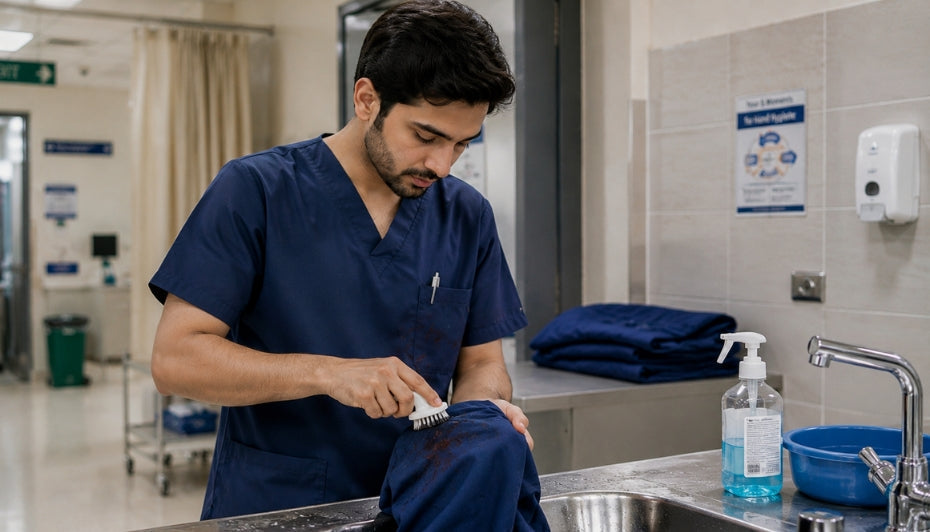
Working in healthcare is one of the most demanding and rewarding professions out there. Whether you are a nurse, doctor, paramedic, or lab technician, your scrubs are your daily uniform—and keeping them clean is more than just a matter of appearance. Blood stains on scrubs are an unfortunate but common reality in clinical settings, and knowing exactly how to deal with them can save your workwear and protect your professional image.
At Clozzi, we understand the unique challenges faced by healthcare workers across Pakistan. In this comprehensive guide, we walk you through everything you need to know about removing blood stains from scrubs, from immediate first-response steps to stubborn set-in stains, so you can stay looking sharp and professional throughout every shift.

Why Acting Quickly on Blood Stains Matters
Blood is a protein-based substance, and like all proteins, it bonds tightly with fabric fibers when exposed to heat or left to dry. The longer a stain sits on your scrubs, the deeper it penetrates the weave of the fabric, making it increasingly difficult—and sometimes impossible—to remove completely.
There are two critical reasons to treat blood stains on scrubs immediately:
- Hygiene and cross-contamination: Dried blood can harbor bacteria. Prompt removal is essential for maintaining infection control standards in clinical environments.
- Professionalism: Clean scrubs communicate trust and competence to patients and colleagues. Stained workwear can cause unnecessary anxiety, particularly in patient-facing roles.
The good news is that with the right techniques, most blood stains can be removed—especially if you act fast. Here is how.
Step-by-Step Guide: How to Get Blood Out of Scrubs
Step 1: Assess the Stain First
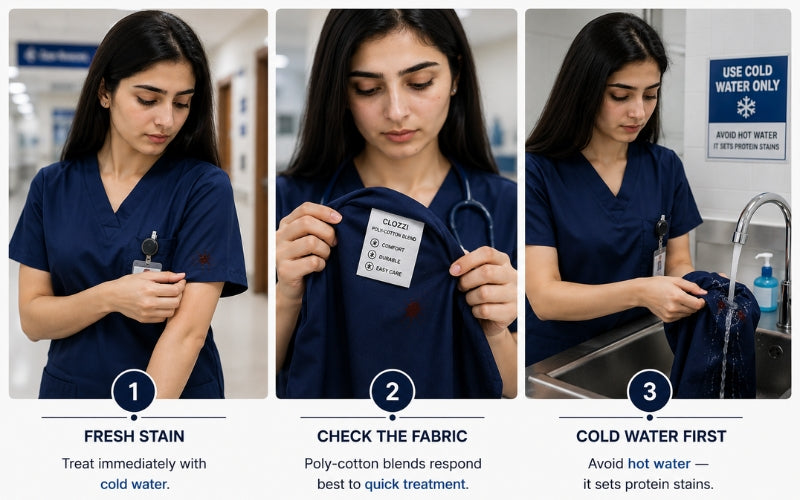
Before reaching for any cleaning product, take a moment to assess the stain. Is it still wet and fresh, or has it already dried? This single factor determines which removal method will work best. Fresh stains respond well to cold water and mild soap, while dried stains require enzymatic cleaners or stronger home remedies. Knowing where you stand helps you choose the right approach from the start.
Step 2: Rinse with Cold Water Immediately
The very first thing you should do is rinse the stained area under cold running water. This is critical:
- Always use cold water, never warm or hot. Heat causes blood proteins to coagulate and bind permanently to fabric fibers.
- Hold the stained area under running water and allow the force of the water to flush blood out from the back of the fabric. Continue until the water runs mostly clear.
Step 3: Blot, Do Not Rub
After rinsing, use a clean white cloth or paper towel to gently blot the stained area. Avoid scrubbing or rubbing, as this spreads the stain wider and pushes it deeper into the fabric. Blotting lifts the blood upward and outward — the direction you want it to go.
Removing Fresh Blood Stains from Scrubs
If you catch the stain while it is still wet, you have the best possible chance of complete removal. Here are the most effective methods for fresh blood stains:
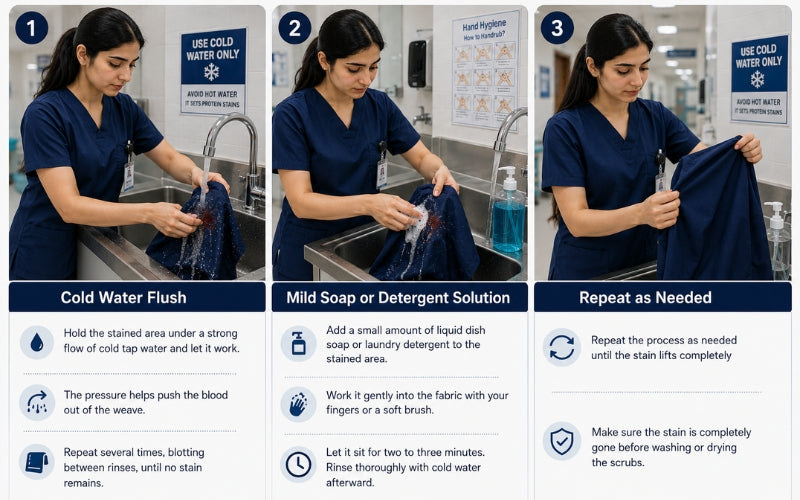
Cold Water Flush: For very fresh stains, cold water alone is often enough. Hold the fabric under a strong flow of cold tap water and let it work. The pressure helps push the blood out of the weave. Repeat several times, blotting between rinses, until no stain remains.
Mild Soap or Detergent Solution: If water alone is not enough, add a small amount of liquid dish soap or laundry detergent to the stained area. Work it gently into the fabric with your fingers or a soft brush, then let it sit for two to three minutes. Rinse thoroughly with cold water afterward. Repeat as needed until the stain lifts.
Tip: Bar soap—the kind commonly available in Pakistani households—works well in the absence of liquid detergent. Rub it directly onto the wet stain and work it into a lather before rinsing.
Removing Set-In or Dried Blood Stains from Scrubs
Dried blood is trickier, but not impossible to remove. You will need to break down the protein bonds that have formed in the fabric. Here are your best options

Enzymatic Stain Removers:
Enzymatic cleaners are specifically formulated to break down protein-based stains like blood, sweat, and food. Apply the cleaner directly to the stain, let it sit for 15 to 30 minutes, then gently agitate the fabric and rinse with cold water. These are the most effective option for stubborn dried blood stains and can be found at larger pharmacies and supermarkets across Pakistan.
Hydrogen Peroxide:
Hydrogen peroxide (available at most medical and pharmacy stores in Pakistan) is a powerful option for blood stains. Pour a small amount directly onto the stain and watch it fizz—this reaction is breaking down the blood proteins. Let it bubble for two to three minutes, then blot with a clean cloth and rinse thoroughly with cold water.
Important caution: Hydrogen peroxide has a mild bleaching effect. Always test it on a hidden area of the fabric first—particularly for darker-colored scrubs such as navy, maroon, bottle green, or black.
Effective Home Remedies Using Everyday Household Items
Not everyone has access to specialized stain removers, and that is perfectly fine. Several common household items found in Pakistani homes work surprisingly well on blood stains:

Baking Soda Paste (Meetha Soda):
Mix baking soda with a small amount of cold water to form a thick paste. Apply it generously over the stain and leave it for 30 minutes. Use an old toothbrush or soft scrubbing brush to work the paste gently into the fabric, and then rinse thoroughly with cold water. Baking soda is gentle on fabric and works well on lighter-colored scrubs.
White Vinegar (Sirka):
White vinegar is a versatile household item that is excellent at breaking down blood stains without damaging fabric. Pour a small amount directly onto the stain and allow it to soak for 10 to 15 minutes. Blot with a clean cloth to lift the loosened stain, then rinse completely with cold water. The vinegar smell will disappear once the scrubs are washed.
Salt and Cold Water:
Salt is a simple but effective first-response treatment. Dissolve two tablespoons of table salt in a cup of cold water and apply the solution to the stain. Let it soak for 10 minutes before rinsing. Salt helps draw moisture and blood out of the fabric fibers before they can set permanently.
Lemon Juice:
Fresh lemon juice acts as a natural bleaching agent and is particularly useful for white or light-colored scrubs. Apply it directly to the stain and, if possible, place the fabric in sunlight for 10 to 20 minutes. The combination of citric acid and UV light is effective at lifting stubborn stains. Rinse thoroughly afterwards.
Aspirin Paste:
Crush one or two aspirin tablets and mix them with a little cold water to form a paste. Apply the paste to the stained area and leave for 30 minutes. Gently scrub with a soft brush before rinsing with cold water. The acetylsalicylic acid in aspirin helps dissolve blood proteins effectively.
Preventative Measures to Protect Your Scrubs
While knowing how to treat stains is important, prevention is always better than the cure. Here are a few practical measures to protect your scrubs on high-risk shifts:
- Wear a protective layer: In situations where blood exposure is likely—surgical settings, emergency wards, and trauma care—wear a disposable gown, apron, or lab coat over your scrubs as a barrier.
- Keep a stain pen or travel-size stain remover handy: Treating a stain immediately at the source—even partially—before you can properly wash the scrubs greatly improves your chances of full removal.
- Choose darker-colored scrubs when possible: Choose darker-colored scrubs when possible: Deep colors like navy blue, dark green, or maroon hide blood stains far better than lighter shades. Browse scrubs online to find the right color for your role.
- Follow your institution's uniform guidelines: Many hospitals and clinics in Pakistan have specific color-coding policies for different departments. Ensure you are wearing the correct designated color for your role, regardless of personal preference.
When to Replace Your Scrubs Instead of Treating Them
Sometimes, despite your best efforts, a blood stain simply will not come out. If you have tried multiple methods and a visible mark remains, it is time to retire those scrubs. Invest in a fresh pair of medical scrubs online that are built to last. Wearing stained workwear—even faintly stained—is unprofessional, and in patient-facing environments, it can cause unnecessary discomfort or concern. Treat it as a practical investment in your professional image and patient care standards.
Upgrade Your Scrubs with Clozzi
If it is time for a fresh pair of scrubs, Clozzi has you covered. We offer a carefully curated selection of high-quality healthcare workwear designed for the demands of the Pakistani clinical environment. Our scrubs combine durability, comfort, and professional style—built to keep up with every shift and every challenge.
Whether you need scrubs for a hospital ward, clinic, dental practice, or laboratory, explore our range of scrub suit for doctors and invest in workwear that works as hard as you do. Explore our range today and invest in workwear that works as hard as you do.
Quick Reference: Blood Stain Removal at a Glance
- Fresh stain? Rinse immediately with cold water, then mild soap.
- Dried stain? Use an enzymatic cleaner or hydrogen peroxide (test on dark fabrics first).
- No specialist products? Try baking soda paste, white vinegar, salt water, lemon juice, or aspirin paste.
- Always: Use cold water only—never hot. Blot, never rub.
- Stain won't budge? It is time for a new pair. Visit clozzi.com for quality replacements.
Final Thoughts
Blood stains are an occupational reality in healthcare, but they do not have to mean the end of your scrubs. Armed with the right knowledge and a few simple products—many of which are already in your home—you can tackle even stubborn stains and keep your workwear looking clean and professional.
And when your scrubs have served their time, Clozzi is here with quality replacements that meet the standards of Pakistan's healthcare professionals. Because looking after yourself is just as important as looking after your patients.