How to Wash, Iron and Care for Scrubs in Pakistan — Complete Guide
· By Maham syed

When it comes to looking sharp and feeling confident in your scrubs, wrinkles are the last thing you want to deal with. Whether you're a healthcare professional, chef, or anyone who wears scrubs regularly, choosing the best scrub in Pakistan can make a noticeable difference in how your uniform looks and performs throughout the day. A high-quality scrub set not only feels more comfortable but also holds its shape better, making it easier to maintain a crisp, wrinkle-free appearance. In this guide, we'll walk you through the best methods for ironing scrubs the right way—so you can save time, achieve a polished look, and keep your scrubs in tip-top condition.
Why Scrub Care Matters
A quality poly-cotton scrub set is a genuine investment. Whether you paid Rs. 4,000 or Rs. 8,000 for it, how you care for it directly determines how long it lasts, how well it retains its color, and whether the embroidery stays sharp and legible through months of daily clinical use.
Clozzi scrub sets are poly-cotton, and washing them correctly helps them last. Done wrong, even a quality fabric will fade, shrink, or lose its shape within 30 washes. When done right, the same set will look professional for two or more years of daily use.
This guide covers every step — washing, drying, ironing, embroidery care, and storage — written specifically for poly-cotton medical scrubs used in Pakistani hospital environments.

Washing Temperature and Cycle
The ideal wash temperature for poly-cotton blend scrubs is 30–40 degrees Celsius. This temperature sanitizes the fabric after standard clinical contact while being gentle enough to prevent shrinkage and color fading across repeated cycles.
Avoid washing above 60 degrees. Temperatures above this cause polyester fibres to break down over time, reduce fabric elasticity, and can cause color fading even in quality poly-cotton blends. The fabric degrades faster at high temperatures than it does from normal wear.
If your scrubs have been in a high-infection clinical environment—ICU, isolation wards, or outbreak settings—and require higher-temperature washing for decontamination, follow your institution's clinical protocols. Patient safety takes priority over fabric longevity. For all standard clinical use, 40 degrees is both effective and fabric-preserving.
Use a normal machine cycle, not heavy-duty. Heavy cycles increase friction between fibres and accelerate pilling and surface wear on poly-cotton blends.
Detergents — What to Use and What to Avoid
Use a standard liquid detergent. Powder detergents can leave residue in poly-cotton blend fabric that dulls the color over time and reduces softness. This is particularly noticeable after 20 or more washes when powder residue accumulates in the fibres.
Avoid bleach entirely. Chlorine bleach—even in small quantities—degrades polyester fibres irreversibly and causes color damage that cannot be corrected. If you need to whiten white lab coats, use an oxygen-based whitener rather than chlorine bleach.
Avoid fabric softener for scrubs. Fabric softener builds up on poly-cotton and reduces the moisture-wicking properties of the fabric over time. It also coats fibres in a way that, counterintuitively, makes the fabric feel less soft after repeated use.
The simplest effective approach for Pakistani conditions is standard liquid detergent, no additives, a 30–40 degree wash, and a normal machine cycle.
Caring for Embroidery
Professional name embroidery is durable when washed correctly. Quality embroidery thread is designed to withstand repeated machine washing without fraying or losing color significantly.
Turn scrubs inside out before washing. This protects the embroidery surface from direct friction against other garments during the wash cycle—the most common cause of premature thread wear and color fading in embroidery.
Where possible, wash embroidered scrubs in a mesh laundry bag. This further reduces friction during the cycle and extends embroidery life—particularly for chest-pocket name embroidery that experiences regular surface contact.
Avoid washing embroidered items alongside garments with hooks, metal zips, or rough textures that can snag on the embroidery thread.
Drying: The Step Most People Get Wrong
Air drying is always preferable to machine drying for poly-cotton scrubs. Machine drying at high heat causes shrinkage and accelerates fabric breakdown—even fabrics labeled as dryer-safe will degrade faster under machine heat than under air.
If you need to machine dry, use the lowest heat setting available and remove scrubs while still slightly damp. The residual fabric heat will complete drying without overheating the fibres.
When air-drying, hang scrubs on a hanger rather than folding them over a rail. This prevents permanent crease marks forming and allows the garment to dry in its natural shape, reducing the ironing needed afterwards.
Avoid drying in direct sunlight for extended periods. UV exposure bleaches poly-cotton and causes color fading faster than washing does—this is particularly visible on darker shades like navy, dark pine green, and maroon.
Ironing — When and How
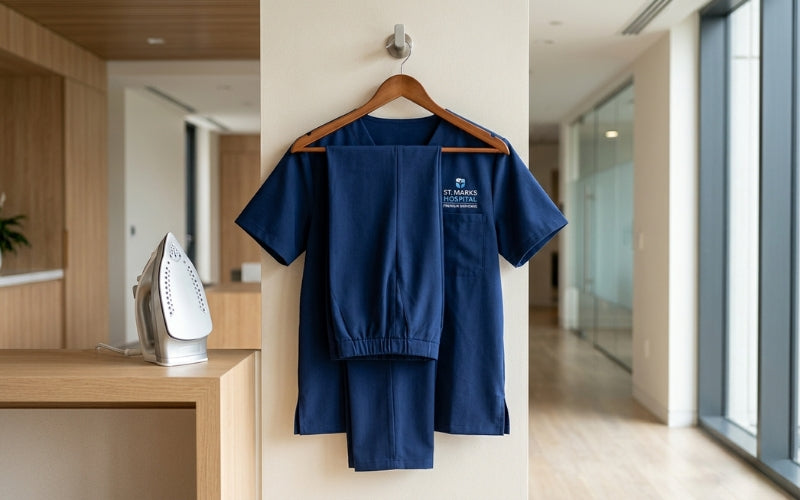
Poly-cotton blend scrubs do not require heavy ironing if removed from the washing machine promptly and hung on a hanger to dry. Light ironing at a medium setting — around 150 degrees Celsius, the cotton setting on most irons — is sufficient if creases have set during drying.
Never iron directly over embroidery. The heat can flatten or distort the embroidery thread permanently. Use a pressing cloth between the iron and any embroidered area, or iron from the reverse side of the fabric.
Pakistan-specific note: do not use steam ironing directly on dark-colored scrubs—navy, dark pine green, maroon, or dark teal. Steam can leave mineral deposits from the water that appear as light marks on dark fabric. These are difficult to remove. Use the dry iron setting for dark shades.
Iron the trouser legs flat rather than creating a sharp central crease. Medical scrubs are workwear, not formal trousers—a sharp crease looks out of place in Pakistani hospital environments. Follow these easy steps to iron your scrubs like a pro, ensuring smooth, wrinkle-free results every time:
- Set the Right Temperature: Different fabrics require different heat levels. Always check the label on your scrubs to ensure you’re using the correct setting. For cotton scrubs, a higher temperature works well, but if your scrubs are made from synthetic materials, lower heat will prevent damage.
- Use Steam for Better Results: Steam is your best friend when ironing scrubs. It helps release stubborn wrinkles, especially around collars and cuffs. If your iron doesn’t have a steam function, consider using a handheld steamer for precision.
- Start with the Collar and Cuffs: Begin by ironing the collar and cuffs—areas most visible to others. Make sure to iron both sides to get a professional, crisp look.
- Iron the Front and Back Panels: Lay the scrubs flat on the ironing board. Start with the front panel and iron it smoothly in vertical strokes. Repeat on the back panel, ensuring you get all the wrinkles out.
- Iron the Sleeves and Legs: For scrubs with sleeves or pants, iron each carefully, making sure to align the seams to avoid unnecessary creases.
- Hang or Fold Immediately: Once you're done ironing, hang your scrubs immediately to avoid new wrinkles. If you need to fold them, do so while they’re still warm for the best results.
Common Mistakes to Avoid When Ironing Scrubs
- Using the Wrong Heat Setting: High heat can damage synthetic fabrics, while low heat won’t be effective on cotton. Always adjust your iron based on fabric type.
- Not Using Steam: Without steam, it’s difficult to get out all the wrinkles, especially in stubborn areas like sleeves or collar edges.
- Ironing on a Dirty Surface: Ensure your ironing board is clean and free of stains that could transfer to your scrubs.
Expert Tips for Long-Lasting, Wrinkle-Free Scrubs
To keep your scrubs wrinkle-free for longer, here are a few pro tips:
- Store Properly: After ironing, store your scrubs by hanging them in a dry place. Avoid overstuffing your closet to keep it from getting wrinkled again.
- Use Fabric Softener: Using a gentle fabric softener when washing your scrubs helps them maintain their softness and reduces the appearance of wrinkles.
- Invest in Quality Scrubs: High-quality scrubs are less likely to wrinkle and will hold their shape better after each wash.
Storage Between Wears
Store clean scrubs hanging on a hanger wherever possible. Folding creates crease lines that become permanent with repeated storage, particularly in the sleeve and front panel areas.
Ensure scrubs are completely dry before storing. Storing damp scrubs—even slightly damp—causes mildew growth in the fabric. This is a particular risk in Pakistan's humid summer months in Karachi and coastal areas and in any wardrobe or hospital locker without good ventilation.
Keep scrubs stored away from clothing with strong or unstable dyes that could transfer—especially relevant for white or light-colored lab coats stored near dark navy or dark green scrubs.
How Long Should Quality Scrubs Last?
A quality poly-cotton blend set washed every other day throughout a one-year house officer posting will go through approximately 180–200 wash cycles. Caring for them as described in this guide helps them stay professional-looking for longer.
Signs your scrubs need replacing: visible fabric pilling on the surface, color that has faded noticeably compared to newer sets, stitching unravelling at seams or pockets, waistband elastic that no longer holds its shape, or embroidery that is fraying or difficult to read.
Following the care steps in this guide helps delay these signs.
Conclusion:
In the end, keeping your scrubs looking sharp isn’t about complicated routines—it’s about consistency and doing the basics right. From washing at the correct temperature to avoiding harsh chemicals, from air-drying properly to ironing with care, each step plays a role in preserving both appearance and durability. When handled correctly, a quality poly-cotton scrub set can maintain its color, structure, and professional look through months—if not years—of demanding daily use.
A crisp, wrinkle-free uniform doesn’t just improve how you look; it reflects discipline, professionalism, and attention to detail in environments where it truly matters. By following these simple yet effective care practices, you not only extend the life of your scrubs but also ensure you show up every day looking polished, confident, and ready for the job.